

The National Horizons Centre at Teeside University has welcomed the news that it will be playing a ‘major role’ in the development of the Novavax COVID-19 vaccine. 60 million doses of the vaccine will be manufactured in Stockton-on-Tees by FUJIFILM Diosynth Biotechnologies (FDB) with the National Horizons Centre developing the skills capacity within the region to meet this demand.
According to Newcastle Magazine, it was announced on Friday 29 January that the clinical trials of Novavax showed an 89 per cent efficacy in fighting COVID-19 and a licence to administer the vaccine is likely to be granted in the next few weeks, with production starting at around the same time.
The National Horizons Centre is a £22.3 million national centre of excellence for the life science industries, and already has a working partnership with FDB.
Based at Teesside University’s Central Park campus in Darlington, the centre has developed a bespoke training course for FDB staff, which looks at the latest development in biologics and teaches the necessary skills to carry out process development and manufacturing of vaccines.
Alongside, the Centre for Process Innovation (CPI), the National Horizons Centre has also partnered with FDB in the Northern Bio-accelerator Partnership which aims to accelerate the development of a North-East bioprocessing, bio-manufacturing and biopharmaceutical hub.
It will position the region as a centre of innovation, attracting investment, enhanced education and workforce development, and aims to enable more companies to bring life-changing medicines to market faster.
The National Horizons Centre is also exploring more ways in which it can use its state-of-the-art facilities and expertise to support FDB, and other vaccine manufacturers, with skills development as it continues its role in the fight against COVID-19.
If you’re looking for recruitment agencies for science graduates, talk to us today.

Whether you’re a client who needs help finding the right person to fill a specific role or a candidate looking for your dream job, there’s lots of reasons to get in touch with Agenda – here are 10 reasons to do just that…
1. Our highly qualified, experienced recruiters are available to help you make the right move
2. When you register with Agenda you’ll be given a dedicated consultant who will be your point of contact throughout the whole process
3. Your dedicated recruitment consultant supports you throughout the process from CV feedback through to interview preparation
4. You can sign up to regular job alerts from Agenda – sent straight to your email inbox!
5. Agenda can discuss things like salary, training opportunities and career progression on your behalf, so you can be confident that the role is right for you
1. Agenda have experienced staff available to meet your short or long term business needs
2. You have access to our large database of potential candidates which will ensure you get the right new team member
3. All our candidates go through a comprehensive pre-employment screening, comprising of 26 background checks including our unique animal rights connection (ARC) checks, this helps to ensure you can be confident you’re hiring the right candidate
4. We work with a wide range of clients in pharmaceutical, biotechnology, academia and contract research organisations, this ensures we have the right skills and contacts to get you your perfect candidate
5. If you’re in need of training then we offer a range of training courses, from interview skill training to security awareness
Contact us today for more information – https://www.agendalifesciences.com/contact-us/

A worldwide study into the health effects of a sedentary lifestyle has been launched, looking into understanding how and why certain types of physical behaviours affect our physical health.
The study, funded by the British Heart Foundation and set to be undertaken by The University College London (UCL) and the University of Sydney will look at the physical activity and related health markers of 72,000 participants.
They will each wear an activity tracker on their thigh, which will measure how much time they spend exercising, standing up, sleeping and sat down.
The study could have a range of implications, given that many life sciences jobs, as well as other formerly office or lab-based roles, are being undertaken remotely, and many people do not have the resources to exercise that were formerly open and available.
Whilst the idea that a sedentary lifestyle is bad for your health is somewhat uncontroversial, as it can cause issues for the heart and circulatory system, the exact mechanics of why this is the case are not completely understood.
Part of the reason for this is based on methodology and the other part is based on the nature of previous studies.
Most of the health markers that examine physical behaviours, such as sleep quality, amount of time exercising and sitting down, were measured independently and often used self-reported figures from questionnaires.
The UCL team argue that all of these behaviours must be looked at together to see how they interact and affect our health.
The long term study will measure the health of these participants over several years, as well as any hospital visits they make.

A new report published by the University of Strathclyde’s Fraser of Allander Institute has revealed that Scotland’s pharmaceutical industry has been continued growth in employment, exports, and productivity.
The National Health Executive reports that the publication outlines how the country’s £1.8 billion pharmaceutical industry has witnessed an increase in employment, exports, and research investments since the last major review in 2017.
The sector is continuing to be a major employer for Scotland, particularly in some of the more deprived areas of the country by placing high-value jobs in towns and rural communities.
Pharmaceutical companies in Scotland employ 5,600 people, with the majority of jobs in North Ayrshire, the Highlands and Dundee. The total figure is a 9 per cent increase on the 5,130 full-time equivalent (FTE) employees reported in 2018. The average income for those within the Scottish pharmaceutical sector is £35,600.
The continued strong investment into pharmaceutical firms has also had a significant impact on the wider economy, as for every 10 jobs in the sector, 17 more are created elsewhere in the country, leading to the industry indirectly supporting 15,250 jobs overall across Scotland. This figure is higher than a large number of common manufacturing industries in the country.
The report also outlines that industry exports have risen from £550 million in 2017, to £575 million. Overall, the sector has a gross value added (GVA) worth £1.8 billion, rising almost 6 per cent from 2017 when it was £1.7 billion.
Annual business spending on pharmaceutical R&D has risen almost $45 million since 2018, with £165 million worth of investment being spent each year on projects ranging such as genetic patient screening for rheumatoid arthritis.
Other projects that have benefited include research into managing hypoglycaemia to reduce pressure on the Scottish Ambulance Service, and better treatment of heart disease to reduce time people spend in hospital.
Alison Culpan, director of the Association of the British Pharmaceutical Industry (ABPI) Scotland, said: “In a year that has seen our companies stepping up and starting to lead us out of the pandemic with the vital vaccines we need, I am proud that the pharmaceutical industry continues to thrive in Scotland.”
She continued, explaining that Scotland’s industry is stronger now than it had been three years ago. More people are employed in good jobs, and there is more investment in research and development, and exports are over half a billion pounds.
“It is important that the Scottish Government is ambitious and works with us to nurture and promote a sector which is not only exporting Scottish excellence around the world but delivering for the health of people here in Scotland,” she concluded.
Deputy director of the Fraser of Allander Institute, Mairi Spowage said that the economic analysis has shown that the industry has continued to grow with direct employment, exports and an increasing GVA.
“The contribution of the sector extends beyond the activities of pharmaceutical companies themselves, with their output supporting employment and income right across the country including areas of historically high unemployment and deprivation,” she said.
If you’re looking for recruitment agencies for science graduates, the talk to our team today
The Uk government has announced a £213 million investment to upgrade UK laboratory facilities to help scientists and researchers fight COVID-19 and install supercomputers to track infectious diseases and more.
According to a UK.GOV press release, Science Minister Amanda Solloway announced on Wednesday 6 January to upgrade UK science facilities which will also allow scientists to respond to global challenges such as climate change, with airborne sensors in London to monitor greenhouse gas emissions, and floating offshore wind farm testing facilities in Plymouth.
The investment is part of the government’s flagship Research & Development (R&D) Roadmap, to bring world-class facilities for scientists and researchers in the UK.
£27 million of the investment will go to researchers at 43 of the UK’s Medical Research Institutes across the country, providing cutting edge equipment such as ultra-high performing computers and microscopes, allowing the detection and modelling of diseases in more details than previously attainable.
This will help researchers respond to the COVID-19 pandemic and help boost resilience to future pandemics, as well as find treatments for other diseases such as cancer and dementia.
Science Minister Amanda Solloway said: “The response from UK scientists and researchers to coronavirus has been nothing short of phenomenal. We need to match this excellence by ensuring scientific facilities are truly world-class, so scientists can continue carrying out life-changing research for years to come as we build back better from the pandemic.”
The £213 million investment will be delivered through the government’s World Class Labs funding scheme and made through 7 of UK Research and Innovation’s (UKRI) research councils. It covers investments in all disciplines from physical sciences to arts and humanities.
If you’re looking for life science recruitment agencies in the UK, talk to us today.

Greater Birmingham and Solihull Local Enterprise Partnership (GBSLEP) has granted £14 million of funding to support the construction of Birmingham Health Innovation Campus, a £210 million life sciences campus in Selly Oak.
Insider Media reports the project, previously known as Birmingham Life Sciences Park, is being led by the University of Birmingham and commercial property firm Bruntwood SciTech, who announced the partnership back in October.
The scheme will consist of 657,000 sq ft of lab, office and incubation space which will provide co-location opportunities for all stages of health and life science businesses. It is expected to attract significant investment and accelerate the development and deployment of new drugs, diagnostics and healthcare technologies to patients.
In 2017, the university agreed on a deal for ten acres of land off the Battery Park site in Selly Oak where a new retail park opened two years ago.
Phase one will have a seven-storey, 133,000 sq ft building which will offer lab and office space to companies specialising in medtech, precision medicine and digital healthcare.
The new building will be home to a brand new innovation centre called Precision Health Technologies Accelerator, which is the main focus of the investment from GNSLEP.
The scheme aims to attract and support businesses from start-ups and SMEs to established enterprises to the city, with the GBSLEP cash supporting the design and fit-out of the facilities such as incubation suites, labs, offices and training facilities.
Precision Health Technologies Accelerator will also be home to Birmingham Precision Medicine Centre, bringing together leading diagnostic and clinical trials capabilities which aim to support the development of new diagnostics and therapeutics.
When construction begins in 2021, it is expected to create approximately 500 new jobs, and a further 500 new roles will become available in life sciences and support jobs once phase one of the building is completed in 2023.
In total, it has been estimated that the new campus will support up to 10,000 new jobs for the local economy, as well as contributing £400 million GVA (Gross Value Added) by 2030.
GBSLEP chairman Tim Pile said: “The accelerator has enormous potential to drive healthcare innovation and the development of new health technologies which represent a huge growth opportunity for our region. This has obviously been brought into even sharper focus this year with the onset of the COVID-19 pandemic.”
He added that investment in sites such as the Birmingham Health Innovation Campus is essential for achieving the economic growth needed for a sustainable recovery, as well as fostering cross-sectorial collaboration.
University of Birmingham vice-principal Tim Jones said: “The campus is a catalyst for the region’s health and life sciences industry and a growing, vibrant cluster.
“GBSLEP’s support and investment will be instrumental in enabling us to develop the core accelerator infrastructure which will facilitate the two specialist centres of excellence within.”
If you’re looking for UK recruitment agencies for science graduates, then get in touch with us today and let us see how we can help.

The life sciences industry is a specialist and an exceptionally competitive industry. Whether you are a recent graduate or are wanting to move up in your career, a strong, specialised CV is the key to getting noticed by life science recruiters.
Life sciences as an industry employs roughly 250,000 people and is a sector that has grown exponentially. As such, your CV needs to make a statement and immediately grab your recruiter’s attention.
Here are some tips to ensure you get noticed in the life sciences sector.
With a field like life sciences, a summary that delivers an impact is the best way to capture their attention.
There are several ways to write a great summary, but the key is start with your selling points; explain in brief your qualifications, expertise and your successes.
The rest of your CV can then build on these points later on, and when you are invited to interview, the interview is likely to be framed on your initial summary points.
Conciseness is key when it comes to a CV. Many recruiters are looking at dozens, if not hundreds of CVs per position, and so they need to see at a glance your suitability.
Make sure you give yourself enough space to explain your qualifications, career so far and why it makes you suited to the role, but avoid including too much detail.
Your CV is the time to showcase your successes and your results. Feel free to highlight your skills with examples, and talk about any successful projects or roles you are part of.
If you have figures or statistics available to quantify your wins, show them off, as a recruiter loves to see the evidential impact a potential hire would make to a company.
If you are using example, the STAR (Situation, Task, Activity, Result) structure is a great way to order your successes.
Life sciences is a detail-focused industry, and an important early test of this is your CV. Proofread and check it for errors constantly. Get a second opinion as well to make sure it reads the way you want it to.
You will be expected to be meticulous in this sector and a CV littered with mistakes can hamper your chances.
There are many creative CV templates and designs out there, and they do indeed initially stand out. It is a risk, however, and if your CV ends up becoming less readable, less consistent and relies too heavily on its style, it will not stand out for the right reasons.
A well written, well crafted simple CV will win over a recruiter far better. After all, they are after substance rather than style.
The key layout considerations you will need to make involve which parts of your career and experience you wish to focus on first.
If you are a recent graduate, lead off with your qualifications after your initial summary, but if you have a little more experience it is worth showcasing your job history and successes.

Eisai, a Japanese pharmaceutical company, and Wren Therapeutics, a spin-off company from the University of Cambridge in the UK and Lund University in Sweden, have announced an exclusive research collaboration agreement.
The news that the two firms will be working together to further drug discovery for a range of conditions that involve synucleinopathies could bring hope to those suffering from Parkinson’s disease, as well as dementia with Lewy bodies.
Together, the organisations will focus their work on the discovery of novel small molecules that target α -synuclein. This work has the potential to lead to new treatments for conditions such as Parkinson’s disease.
Dr Teiji Kimura, vice president, chief discovery officer of the Eisai Neurology Business Group, described the collaboration as “exciting” and said that he expects it to be “uniquely successful in identifying novel disease-modifying therapeutics for patients suffering from dementia with Lewy bodies, Parkinson’s disease and related disorders”.
This isn’t the only exciting news for those hoping for a treatment for Parkinson’s disease to be reported recently.
ScienceBlog recently revealed that researchers at Carnegie Mellon University have found a way to study the specific brain cells associated with Parkinson’s disease symptoms in incredible detail.
The new technique currently only works in specially bred mice, but it’s an important breakthrough for those seeking to gain a better understanding of the condition, because it costs less than previous methods used for the same purpose.
Alyssa Lawler, a Ph.D. student in biological sciences at the university, has already been able to use the technique to identify previously undiscovered changes to how diseased neurons sense and use oxygen.
Speaking to the publication, she commented: “We’re learning how to speak to cells, to speak their language.”
If you’re looking for assistance with scientific professionals recruitment, get in touch with our team of experts today.
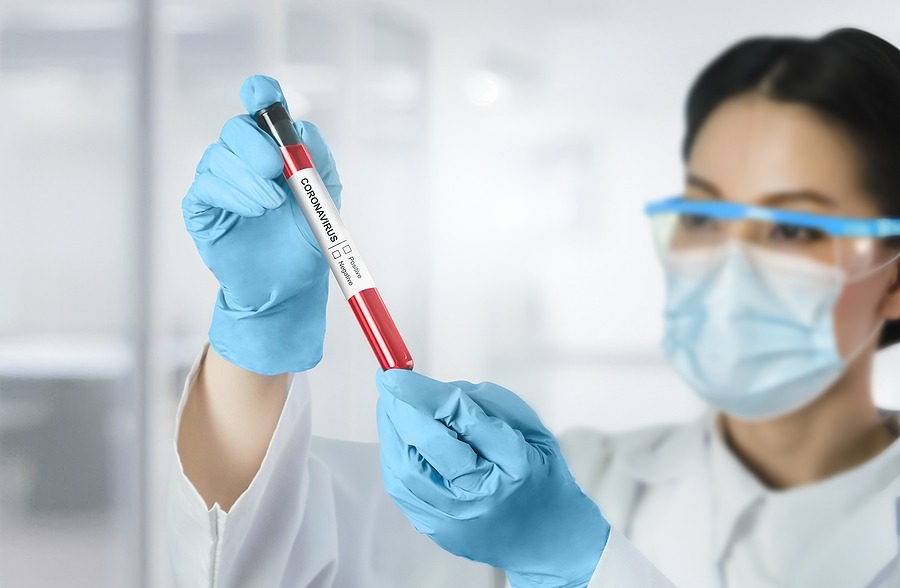
The COVID-19 vaccine candidate that has been developed by the team at Oxford University has the capacity to be up to 90 per cent effective, the large-scale trials have suggested.
BBC News reports that the vaccine, developed in partnership with pharmaceutical firm AstraZeneca, was found two have an efficacy of 70.4 per cent, meaning it stops fewer people from developing coronavirus symptoms than those made by Pfizer and Moderna which showed around 95 per cent protection.
But in trials where patients received half a dose of the vaccine initially, followed by a full dose a month later, protection provided by the Oxford vaccine stood at around 90 per cent, according to Professor Andrew Pollard, the Oxford group’s director.
More than 24,000 volunteers were involved in Oxford’s phase three trials in the UK and Brazil, half of which were given the vaccine and the rest were given a fake jab. There were only 30 cases of COVID-19 in people given the vaccine compared to 101 in the placebo group. The result also showed lower levels of asymptomatic infection in the smaller dose group
“We are really pleased with these results,” Professor Pollard told the BBC Radio 4 Today programme.
“What we have got is a vaccine that is able to protect against coronavirus disease and, importantly, there were no hospitalisations or severe cases in anyone who had the Oxford vaccine.”
The UK has placed orders for 100 million doses of the Oxford vaccine, enough to vaccinate most of the population. Health secretary Matt Hancock told the BBC the government hoped vaccination will be able to begin next month.
“The bulk of the vaccine rollout programme will be in January, February, March. And we hope that sometime after Easter things will be able to start to get back to normal”, he said.
AstraZeneca’s commitment not to profit from the immunisation makes it cheaper than its rivals from the US, £3 versus £15 for Pfizer and £25 for Moderna. However, scientists reacting to Oxford’s breakthrough described it as a ‘herculean achievement’ that three vaccines had been developed and proven effective in under a year.
The Oxford vaccine can also be stored at standard fridge temperature, which makes it easier to hold stock and transport than the Pfizer and Moderna vaccines which need to be stored at very cold temperatures, between -70ºC and -20ºC respectively.
Peter Horby, professor of emerging infectious diseases and global health at the University of Oxford tweeted: “Oxford jab is far cheaper, and is easier to store and get to every corner of the world than the other two.”
Sarah Gilbert, professor of vaccinology at the University of Oxford, and architect of the vaccine, said the announcement takes the nation one step closer to the end of the devastation caused by the coronavirus.
“We will continue to work to provide the detailed information to regulators. It has been a privilege to be part of this multi-national effort which will reap benefits for the whole world,” she said.
If you’re looking for recruitment agencies for science graduates, then get in touch today.

As a job seeker, you don’t have long to get your CV noticed and to convince a recruiter that you are a good choice to take to the next stage of the recruitment process.
Forbes recently shared some insights about how to write a CV that stands out, based on research carried out by careers website Ladders. It found that recruiters spend an average of 7.4 seconds reviewing a CV.
Among the recommendations to get recruiters to spend a little longer looking at what you have to offer are to include an overview of your skills and experience at the top of your CV, to use clear headers throughout, to put your content in bulleted lists and to include relevant keywords where you can.
You’ll need to tailor your CV for different roles if you want to increase your chances of progressing too. One simple, but effective, tip is to use the words featured in the job description throughout your CV.
Chris Waltenbaugh, payment processing expert at Payment Depot, told the publication that the CVs that stand out for him when he’s hiring are “the ones that show the person has taken time to think about the position in which they’re applying and carefully crafted a document that demonstrates their understanding and what’s unique about them that will bring value to the job”.
It’s also better to focus on specific accomplishments within your career, rather than creating a CV that’s full of vague responsibilities or assertions.
Once your CV gets through the initial stages of selection, you’ll more than likely have to complete a remote interview.
According to Silicon Canals, you should treat this much like an in-person interview. That means you should prepare as you normally would and make sure you’re dressed appropriately.
Don’t forget to tidy the space you’ll be in when you have the interview, so that this also looks presentable during your call.
Looking for life science vacancies? Take a look at the roles that we’re currently recruiting for.

Scientists are to begin trials on whether vitamin D can protect people from the coronavirus as growing evidence suggests the 3p-a-day supplement could be a lifesaver.
According to the BBC, researchers from the Queen Mary University of London are to recruit 5,000 volunteers to take the vitamin for six months if they do not already take high doses of the vitamin. Experts will then assess whether participants are at less risk of contracting the virus and developing severe cases of the disease during the winter months.
There has been mounting evidence that a significant amount of people who test piscine for COVID-19 do jot have enough vitamin D in the bodies, and the sickest of patients are often deficient.
Approximately two in five Brits are defunct in vitamin D during the winter months when there is less sunlight for the body to produce its own, and when respiratory infections are most common, and those with darker skin are at even higher risk.
It has led to call for doctors to dish out the cheap vitamin D supplements to fight the disease while a vaccine continues to be developed.
Recruits for the trial will take either 800 IU or 3,200 IU a day of the vitamin for six months, as well as a control group taking the NHS recommended daily amount of 400 IU.
While 400 IU is the recommended daily dose for the winter months, vitamin D is harmless and poses no risk, as the human body simply removes any excess levels.
Researchers will track the incidence of doctor-diagnosed or laboratory-confirmed acute respiratory infections in participants during the trial, to see whether the supplements have affected their risk or severity of the infection.
Volunteers will also need to do a finger-prick test to check their vitamin D levels.
Dr David Jolliffe, from the Queen Mary University of London, said the study had the potential to give a ‘definitive answer’ on whether vitamin D could protect against coronavirus.
“Vitamin D supplements are low in cost, low in risk and widely accessible; if proven effective, they could significantly aid in our global fight against the virus,” he said.
Professor Adrian Martineau, who is also involved in the study, said: “Vitamin D deficiency is more common in older people, in people who are overweight, and in Black and Asian people – all of the groups who are at increased risk of becoming very ill with COVID-19.”
Only one study so far has compared the results with a control group who did not take any of the vitamin D supplement. Researchers from the University of Cordoba in Spain gave high doses of calcifediol – a type of vitamin D supplement – to 50 patients hospitalised with the disease.
The results, published last month, showed there were no deaths among volunteers receiving the vitamin and all 50 patients were eventually discharged by the end of the study. But two of the 26 patients in a control group, who were not given the tablets, died.
Just one patient given calcifediol felt ill enough to be admitted to intensive care, whereas half of the participants in the control group were taken to ICU and two died.
However, it was the most promising result for the trials so far, despite scientists criticising the small sample size.
If you need science graduate recruitment agencies, talk to our team today.

Once the UK leaves the EU, the country will gain the autonomy for streamlining approval processes for medicines, joining other countries, such as the US, Canada, Australia, Switzerland, Singapore, and Brazil, in speeding up the approval of innovative medicines, including cancer treatments.
According to GOV.UK press release, the UK will join two initiatives that will bring together some of the world’s leading regulators to allow pharmaceutical companies to submit medicines and treatments to be reviewed by several countries simultaneously, pooling resources, which will allow patients to benefit from earlier access.
Health and Social Care Secretary Matt Hancock said: “I will stop at nothing to make sure NHS patients can access life-saving treatments as quickly as possible and now we have left the EU, we have an opportunity to speed up the time it takes to get new medicines from bench to bedside.”
He added that it had become clear with the UK’s work on dexamethasone and other COVID-19 treatments, that the country leads the way with research into transformative treatments. He said he was ‘delighted’ the UK will be collaborating with global regulators to put patients first by fast-tracking cutting edge medicines.
Both groups will aim to ensure that patient safety and scientific integrity is upheld to the highest possible standards while removing red tape and working together to get medicines onto the market quicker.
The two approval initiatives include:
Project Orbis
Project Orbis is a programme coordinated by the US Food and Drug Administration (FDA) involving Canada, Australia, Switzerland, Singapore, and Brazil to review and approve promising cancer treatments.
The initiative has already given the green light to life-saving treatments for patients suffering from conditions such as breast cancer, lung cancer, liver cancer, endometrial cancer, and chronic lymphocytic leukaemia.
Access consortium
The Access consortium programme involves Australia, Canada, Switzerland, and Singapore in helping secure improved patient access to high-quality, safe, and effective medicines. The consortium has already approved nine innovative prescription medicines, including five new cancer treatments.
Both groups will be monitored by the UK’s Medicines and Healthcare products Regulatory Agency (MHRA) and will become a full participant after the EU transition period on 1 January 2021.
The final decision to authorise medicines onto the UK market will be with MHRA, who will have complete autonomy to streamline the approval processes further if required.
Dr June Raine, MHRA Chief Executive, said: “We are committed to working together to ensure that UK patients are among the first to benefit from promising life-saving treatments. Through our commitment to international cooperation and innovation in regulation, the MHRA continues to be at the forefront of new developments as a global hub for life sciences.”
Richard Pazdur, MD, Director, FDA Oncology Center of Excellence, explained that Project Orbis was developed from a monthly teleconference between the FDA and other regulators, which indicated that the US typically receives applications months or even years before other countries.
“We decided to address this by partnering with other countries and asking the pharmaceutical companies to submit applications to several regulators at about the same time, to provide early entry of these applications into their regulatory systems,” he said.
If you’re looking for life science recruitment agencies in the UK, get in touch today.