
Agenda is pleased to announce that this week it has successfully passed its 6-monthly audit for ISO 9001, ISO27001 and ISO14001, this accreditation is fundamental to the quality management, information security and green processes that underpin our commitment to continually improving our service and adding value to our customers.

The auditors from ISOQAR this week reviewed Agenda’s compliance against the following three standards and covered all aspects of the business:
Agenda is pleased to announce that it passed the audits with flying colours with no non-conformances raised.
Agenda not wanting to stand still, have successfully past the stage 1 audit for ISO 22301 Business Continuity Management System (BCMS). This standard provides a framework that will help agenda prepare for, respond to, and recover from potential disruptive incidents.
With GDPR just around the corner Agenda took this opportunity to implement the BS 10012 Personal Information Management System(PIMS) to help manage the privacy of personal information within the business. Agenda also achieved stage 1 compliance in this standard too, and is looking forward to passing the stage 2 audits in June for 22301 and BS 10012.
Great credit goes to the team who manage the standards on a day to day basis including our Head of Compliance, Chris Withers and all of our staff who are committed to working to the standards and deliver high quality customer service on a daily basis.
Agenda Life Sciences are proud to announce that in March our Managing Director, Norman Mortell was awarded ‘Honorary Member’ status by the Institute of Animal Technology (IAT).

Each year the IAT Council may nominate Honorary Members, this is seen as any person who has substantially furthered the interests of the Institute. This person is then invited to Congress to receive their reward.
At this year’s 2018 Congress, Norman was given Honorary Member status in recognition of his commitment to the animal research community over more than 20 years. of volunteer contributions.
Throughout Norman’s career he has been closely involved with the IAT on a volunteer basis and often in his own time, he founded and was the chair of his local branch for many years and latterly was the Chair of the Communications Group on the main IAT Council in London. Norman is passionate about providing Animal Technologists with career development opportunities, almost as passionate as he is about animal care and welfare. Norman is a staunch advocate of the IAT and encourages youngsters to get involved and shape the future of the IAT.
On hearing of his award, Norman said “I have always been an advocate of looking after the people who look after the animals, the IAT supports the development of professional animal care and welfare qualifications to support ethical research that has animal welfare at the centre of its principle. I have been proud to be a part of the IAT and receiving this award is a real honour.”
We are always told to ‘avoid that’ and ‘do this’, here’s 15 health ‘facts’ we’re often told which are in fact totally wrong:

1. Your blood turns blue when it’s out of oxygen: MYTH
Blood is never blue: It turns dark red when it’s not carrying oxygen. Blood only looks blue because you are seeing it through several layers of tissue, which filters the colour.
2. Humans only have 5 senses: MYTH
We have more than the basic sight, smell, taste, touch and hearing. People often neglect vital senses such as balance, temperature, and time, as well as proprioception – the body awareness that helps us not walk into things all the time – and nociception, our sense of pain.
3. Carrots give you night vision: MYTH
Those who suffer with poor vision will especially benefit from Vitamin A as it particularly good for the health of your eyes. The main nutrient in Carrots is Vitamin A which is where the link is, however, eating great quantities will sadly not give you night vision.
This myth is actually thought to date back to British Propaganda used during WWII.
4. Chewing gum takes 7 years to digest after being swallowed: MYTH
Chewing gum is for the most part indigestible, however, the occasional swallowed piece can pass through your intestines and exit the body in the same way any other ingestible item.
Issues have arisen in cases where chewing gum that has been swallowed in addition to other things that are also not supposed to be swallowed…such as coins
5. Microwaves give you cancer and disrupt pacemakers: MYTH
Radiation from microwaves won’t give you cancer, it’ll just warm up your tea.
There are only a few types of radiation that cause cancer, and this is subject to the dose. This can include radiation from the sun.
Whilst a microwave won’t affect a pacemaker, anti-theft systems, metal detectors, powerful fridge magnets, mobile phones and sometimes even headphones can.
6. Swimming within 1 hour of eating can cause you to cramp up and drown: MYTH
This claim is based on the digestion of food draws blood to the stomach in turn taking it away from the muscles which means cramping up is more likely. There’s no scientific evidence to back this claim up though and many sources report that there are 0 cases reported cases of drowning relating to cramp associated with swimming on a full stomach.
7. Daily vitamins will keep you healthy: MYTH
If only all it took was taking one pill per day to stay healthy. Sadly, this is not the case and decades of vitamin research is yet to find any significant health benefits. They’ve actually recently been associated with increased risk of various types of cancer.
8. ‘Breaking the seal’ when you’re out drinking means that you’ll be more frequent: MYTH
There is no seal. Alcohol is a diuretic. The more you drink the more your trips to the toilets will increase.
9. ‘Hair of the dog’ can cure a hangover: MYTH
You’re prolonging the inevitable unfortunately. Even a mimosa or Bloody Mary the morning after won’t do anything to cure the hangover, it will just delay the suffering!
Stay off the coffee too, as its also a diuretic you’re actually going to be worse off as you’ll be dehydrating yourself further!
10. Drinking alcohol kills your brain cells: MYTH
Drinking to excess can damage the connections between your brain cells, however, it wont actually destroy any neurons.
That’s not a green light to go mad though as excessive drinking over long periods of time can cause damage to your brain.
11. Brown sugar is ‘better’ for you than white sugar: MYTH
Just because brown sugar is brown does not mean that it is more ‘natural’ or indeed healthier for you. Sugar gets its colour from a common residual sticky syrup called molasses.
The difference between them is that brown sugar retains some of the molasses, but if refined further you would be presented with white sugar.
Molasses does have some vitamins and minerals but there is nowhere near enough in standard brown sugar to make it the ‘healthier’ option. To all extends and purposes, brown or white, its still sugar to your body.
12. Sitting too close to the TV will damage your eyes: MYTH
Everyone must have heard this as a child. Turns out, the worst that will happen is a headache from eye fatigue.
It’s thought that this originated from old TVs which used to emit low energy X-rays. Modern day ones do not have this issue.
13. Cracking your knuckles will cause arthritis: MYTH
Another one that most children get told. Fortunately, this also is not true. Although it is the cause of annoyance to people around you, it’s not going to affect your long-term health. The ‘cracking’ and/or ‘popping’ noise is caused by air bubbles escaping from the joints
14. Being cold will lead to you catching a cold: MYTH
Did our parents ever tell us the truth!? Providing you avoid hypothermia, there’s no evidence that going outside with wet hair when it’s freezing will make you ill.
We get viruses more frequently in the winter as we spend more time in close quarters with other people who will potentially have a cold causing virus.
15. Starve a fever, feed a cold: MYTH
A tiny and largely misinterpreted study in 2002 recently fanned the flames of this myth but limiting your caloric consumption may actually hurt your immune system more than helping it — it would certainly be a bad idea to not eat during the six- to eight-day duration of a cold.
Instead, doctors say to go ahead and eat if you can. The more accurate expression would be “feed a cold, feed a fever.” And make sure to drink plenty of fluids.
Agenda Life Sciences would like to welcome Steve Dean to Agenda who strengthens the Manchester based facility management team.

Steve Dean is an accomplished Senior Director and scientist with almost 30 years’ experience working in the Contract Research Organisation industry. He has built a successful career in strategic planning, people-management, business development, operational and financial management, encompassing diverse organisations, nations and cultures and brings a strong track record in leading teams’ and companies’ profitability.
Steve joined Covance in 1989 as a Genetic Toxicologist and over subsequent years became head of the Genetic Toxicology group then Head of Toxicology Operations. Following a successful spell as MD of Research Toxicology Centre in Rome, he then took on global and European Business Development roles for HLS, Harlan and WIL Research. As a sales leader he focussed on building world-class sales teams and driving substantial, double-digit sales growth. His most recent role was as MD of Smithers Viscient in Harrogate.
Steve will support the scientific interactions with clients, manage the implementation of GLP (Good Laboratory Practice) onsite and have a broader role in Business Development on behalf of the client.
We are looking forward to Steve coming on board.
Kidney Cancer is the 7th most common type in the UK, and each year around 12,600 people are diagnosed with it with 4,400 losing their life to it. The disease, which is also known as renal cancer, is mainly diagnosed in people in their 60s or 70s but a new study has identified that the roots of kidney cancer can start in childhood or adolescence, decades before it is diagnosed if it ever is at all.

It is caused by a common fault for humans – a botched repair of broken chromosomes which can remain dormant in the body and may never cause us any harm. However, for the unlucky 1%-2% of the population, this fault combines with further genetic mutations to set the time bomb ticking as a single damaged cell may be all it takes to trigger kidney cancer decades later. These mutations could be caused by smoking, obesity, or an inherited risk of kidney cancer.
A new study has been conducted, which consisted of analysing over 1,000 tumour samples in 100 kidney cancer patients – these patients all had clear cell renal cell carcinoma which is the most common type of kidney cancer. From this scientists, including those from the Francis Crick Institute, were able to wind back the clock and reconstruct the genetic sequence of events that led to the different ways these tumours developed. The analysis showed that there are three evolutionary paths that kidney cancer could take.
The first type of kidney cancer follows a slow evolutionary path and never acquires the ability to become aggressive. These tumours showed little genetic damage and were unlikely to spread, meaning patients would not need to receive such aggressive cancer treatment.
The second type in contrast forms aggressive tumours which rapidly evolve through genomic damage early on in the cancer’s development. This means the cancer can quickly spread to other areas of the body, often before the initial diagnosis of kidney cancer is made.
The third type also has the ability to spread through genomic damage but over a much longer period of time. This type also contains aggressive cancer cells, but the slower evolution means it will often be confined to one area, making it easier to treat.
This explains why kidney cancer could kill quickly in one patient, but another patient with an identical cancer could live for years after treatment. At the moment this leads to uncertainty for both patients and doctors, but hopefully the new study will help identify opportunities for earlier monitoring and treatment of kidney cancer. Cancer Research UK also suggests the study could lead to patients getting the best care, as treatments could now be more individual depending on the circumstances.
Charles Swanton from the Francis Crick Institute hopes these findings will lead to the development of a ‘rule book’ on tumour evolution that will allow clinicians to identify which type a patient has to then provide an accurate prognosis. Although still in its early days, this new discovery looks promising for the future of cancer treatment.
ELRIG Research & Innovation 2018 – Day 2
Disease is a journey to work!

Following a fabulously informative and inspiring day 1 which was focussed on oncology research, ELRIG’s Research and Innovation conference day 2 looked at neurosciences with speakers from GSK, Storm Therapeutics, Astex Pharmaceuticals, Sygnature Discovery and the universities of Cambridge and Oxford amonst some who shared their research and described new approaches.
Let me start at the early stages of the familiar research path: identifying the correct cell line to work with. Caleb Webber from the Henry Wellcome Centre for gene function at Oxford University described disease as a journey to work and used the analogy to ask if we are looking at the correct targets for new treatments.
Imagine the life cycle of a cell as your daily commute to work where the cell is your car and the journey represents cell development. Correct cell development would see you leave home on time and arrive at work on time without incident. Correct cell function would see you accelerate, change gear, negotiate roundabouts, and park to allow you to get to work safely. But, on any given day you leave home as normal, get halfway there and have a crash. This crash represents the disease state. Something has happened to disrupt your journey and you don’t arrive at work, the cell (your car) is broken. Research serves to investigate how this accident happened and find ways of preventing the accident and thus preventing disease. A common approach is to study the crash scene (broken cell) and work backwards to find the cause. Calebs suggestion was to start at the beginning of the journey and map all the events up to the accident to get a clearer picture of what went wrong and identify actions in the build-up which attributed to the crash. By identifying what can go wrong before the crash we can develop treatments which focus on early disease progression rather than fixing the broken scene after it has happened. For example, you hit a pot-hole at the beginning of your journey (not uncommon on todays roads!). You feel a slight bump but nothing to concern you, you are used to hitting pot-holes on that road so think nothing of it. That small bump causes a slow puncture but you continue your journey not knowing this. Some miles later your tyre is flat, you brake but the puncture causes the car to veer off the road – CRASH! In biological terms, you cell is broken, disease ensues and all because of that pot-hole some miles earlier. You could replace the tyre and carry on, this would be akin to taking a drug which replaces the broken function of the cell, but how may times in your life will you need to do this, the treatment is ongoing and eventually you wont be able to replace the tyre again (drug resistance/tolerability). Or, you could fill the pot-hole. Fill it once, fix the problem long term.
Back to biology. To identify the pothole you need to see the whole journey’s events. Biologically speaking you need to see all the stages of the cells life and what is happening at each stage (which genes are active). Single cell sequencing can give you the gene expression status of all cells in a sample (a maintenance report on every car at every stage of the journey). If you order the cells from those at the start of development to those at the end of their life and compare the gene expression profiles you can see the genes of interest at every stage of their journey. Look at which specific genes are active around the time the car hits the pothole and you have a gene/event as a therapeutic target. Sounds simple now! A great analogy Caleb, thanks for sharing.
Special thanks to the team at ELRIG for a great event over the past 2 days and the sponsoring companies who’s contribution allows delegates to attend for free. We look forward to meeting you again at future events

Intended to capture current and emerging opportunities in drug discovery research, ELRIG’s Research & Innovation event spans 2 days and is packed with excellent presentations from key research groups focussing on new biology and new therapeutic targets for drug discovery. Held at the beautiful Homerton College in Cambridge, our local business development executive, Laura Gilbey, as been busy meeting research groups, key opinion leaders and suppliers. We wanted to blog some of the exciting content from todays presentations exploring drug research innovations and novel targets in one of the highest priority areas of medical need, namely oncology.
Todays plenary keynote speaker, Tony Kouzarides highlighted mRNA as an emerging field of research, with particular focus on acute myeloid leukaemia (AML). “mRNA is not new” I hear you say, but in terms of our understanding of mRNA involvement in disease mechanisms and as a potential target for new treatments, mRNA has been difficult to study primarily because it is poorly detected by mass spectrometry. Once this challenge was overcome, mRNA editing offered a new avenue of research. Tony described to delegates the research which ultimately identified METTL3, an enzyme which modifies mRNA by adding methyl groups to coding regions. This methylation increased the ability of RNA to be translated into proteins, proteins which were essential for the progression of AML. They continued to illustrate that inhibiting METTL3 would stop the translation of a whole set of proteins that leukaemia needs, thus identifying METTL3 inhibition as a potential new therapy.
Of course, we didn’t get far into the day before CRISPR-Cas9 was discussed. Dubbed the ‘game changer’ of research this magic button can selectively induce double stranded DNA breakages which are often incorrectly repaired by our cells and the broken gene is effectively switched off. Fiona Behan of The Wellcome Trust Sanger Institute described a huge body of work undertaken in collaboration with GSK which used CRISPR-Cas9 to investigate 197 cancer cell lines (so far) and identify genes which are essential to the survival and growth of cancerous cells. Fiona believes they have recently identified a strong candidate gene for new targeted therapy and is validating early results. We look forward to updates!
Great talks on single cell RNA sequencing, RNA splicing, neurotrophic signally, KRAS inhibition and many more developing strategies for new drug development made today extremely enlightening and illustrated the strength of the UK life science and drug discovery industry. With a strong focus on collaborations between academic research groups and pharma companies to bridge the gap between research and therapies, I leave today with a renewed excitement that new therapies are on the way.
I’m already looking forward to tomorrow and more opportunities to interact with #ELRIGRI18
On April 11th, World Parkinson’s Day, Agenda are looking to raise awareness of the disease. Millions of people around the world are living with Parkinson’s disease, with the number of diagnosis’ in the UK expected to rise by around 18% between 2018 and 2025.

Current medications can help to manage Parkinson’s symptoms, but we don’t yet have treatment that can cure, slow, stop or reverse the progression of Parkinson’s. This means the condition continues to progress as do the symptoms and side effects of taking more medication.
Researchers are striving for a cure at all times and during this year Agenda have selected the Parkinson’s Society as their charity of the year, meaning that we will be fundraising for them throughout the year.
To mark World Parkinson’s Day we are holding a dress down day today and on Friday our staff will be participating in a bake sale, but as well as these events there has also been talk of tandem skydives and it’s a knockout fun runs later in the year!
Keep your eyes peeled on our social media for any other fundraising links that we share!
To donate to our JustGiving pages for the Hull 10k and our MD Norman’s daring zipline then please click the links below.
Some people hate it and some people love to do it, but cracking one’s knuckles is a process which seems insignificant to scientific research. That being said, the debate has gone on for around a century now, and until recently the consensus was that we still don’t know what causes the ‘pop’ sound when knuckles crack.

Back in the 1970s it was hypothesised that the noise came from the microscopic air bubbles in our joint fluid bursting. However, this was brought into question years later when it was discovered that bubbles remained in the fluid of the joints even after people had cracked their knuckles. In 2015 it was therefore suggested that the noise was due to the formation of these bubbles. Now a new study suggests that the air bubbles compressing, but not fully collapsing, may be the source of the noise.
This new development comes from a study published in Scientific Reports by Vineeth Chandran Suja and his former professor Abdul Barakat. Suja got the idea when he was cracking his knuckles in class in France and decided to investigate what the cause of the sound was.
He was conducting his investigation when the 2015 study was published, where researchers used a test subject and pulled his fingers in an MRI machine to see that bubbles in the joints appear as they are pulled apart and produce a popping sound. Suja was sceptical of this study as current imaging techniques are not fast enough to catch the behaviour of the bubbles in action. Suja and Barakat instead created a model of the knuckle joint, and experimented to account for factors such as thickness of surrounding fluid and speed at which joints move.
They found that a knuckle crack occurs in one-third of a second, and this is too fast for bubbles to fully collapse to create the ‘pop’ sound. A partial collapse however would fit into the fast time-frame, and is also enough to generate pressure waves that match the speed and intensity needed to create the crack sound. Tiny bubbles remain in the joint fluid after the knuckle has been cracked. These can then reform over time, meaning we will be ready to crack our knuckles again after 20 minutes or so.
The experiment also looked into why some people are less likely to, or unable to crack their knuckles. People who have a smaller space between the bones in the knuckles will be able to crack them, as in knuckles with larger spaces the pressure in the joint fluid will not drop low enough to trigger the sound.
This new information also does not affect what we already know – cracking your knuckles will not give you arthritis or cause you any harm.
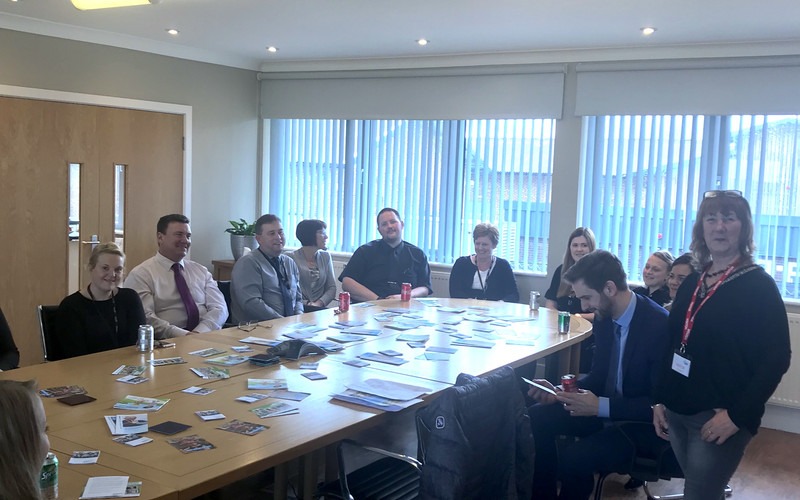
On the 4th of April, we held our latest Lunch and Learn of the year, and this time the session was all to do with our Charity of the Year – Parkinson’s.
Chrissie, our regional representative from Parkinson’s, kindly agreed to come to Head Office and lead the session for staff who wanted to find out a little bit more about what the charity is about.
Chrissie brought in loads of promotional materials for staff to look through and to provide more information on the type of fundraising event days that they have coming up. She also gave a brilliant run through of what Parkinson’s disease is, how they are trying to combat it and what we, and others can do to help!
Agenda already have some ideas in the pipeline – alongside our usual dress down days, bake sales and raffles, there has also been talk of 10K runs, daring 125mph zipline rides, tandem skydives and it’s a knockout fun runs!
Keep your eyes peeled on our social media for any fundraising links that we share!

The 20th – 23rd of March 2018 were this year’s dates for the annual IAT Congress held in Harrogate.
We arrived Monday afternoon to set up the Agenda stand so everything was ready for the big opening event on Tuesday evening. This year we had a Wii machine for some extra fun and to win some Toblerones, one of which weighed 4.5 kg!
Tuesday evening was very busy with a lot of delegates giving it a go on the Wii, having a drink, catching up with old colleagues and friends and meeting new ones. Congress is a great opportunity to mix with animal technicians and trade all in one big room.
The evening started with an IAT event where our Facility Manager at Hatfield, Sam, got her Fellow Award and our very own Norman Mortell got the honourary members award.
Tim McGuire received the award on the behalf of Norman as he was unable to attend. A big congratulations from all of us to both of them for their continued commitment to animal research!
It was a very enjoyable evening and Congress was now kicking off to a great start! Reece, from University of Leicester, was the first winner of our Wii competition that evening, congratulations Reece, we hope you enjoyed your chocolate!
Wednesday was a long day with the stand open early, with more talks and workshops underway as well as liaising with clients. Laura did a 60 second flash trade presentation about Agenda as well as Lomir, both received excellent and positive feedback.

From head office Rachel, Mat, Ali, Emily and Den arrived to attend Congress for one day to meet clients and attend some of the workshops. It was lovely having so many Agenda staff representing our services and meeting new and old faces.
In addition Toby also ran a step competition in collaboration with AS ET, and all were welcome to attend for only £2. What a good initiative Toby, let’s do it again next year!
Our Wii competition was very well attended that day too, as the prize was the very popular 4.5 kg Toblerone. Karl from Cambridge University was the lucky winner, congratulations to him.
To round up a successful day in the evening we attended a meal and disco with live music which was enjoyed by all.
Thursday was the last day of the conference with the big Gala dinner in the evening and the AS ET reception where our very own Animal Technician Jobie was the winner. This is the second year in a row an Agenda Technician has won this award as Micah won it last year. We are very proud to have such ambitious technicians working for us and it’s great to see young technicians working hard and contributing to research. Congratulations to Jobie!
We had 3 tables at the Gala dinner this year and it was a wonderful evening to end a long but fun week.
See you all again next year for more opportunities and catch ups!
Scott and Mark Kelly are identical twins with the same two sets of matching DNA. In a unique experiment, NASA sent Scott into space for 1 year in order for them to observe how space flight changes the human body and brain.
When Scott Kelly, a veteran astronaut of 4 space flights, stood up on stage after 1 year in space, he was 2 inches taller. This newfound height actually turned out to be a temporary and was caused by his spine being physically stretched in a gravity-free environment and not as a result of his genes being altered.
After further research, NASA are reporting many tweaks in his genes that are not present in his brother Mark, some temporary but others have been longer lasting.
“When he went up into space it was like fireworks of gene expression,” Christopher Mason, a principal investigator on the NASA twins study. But the changes that seem to have stuck around include changes in immune system function and retinal function related to his eye health.”
According to Mason, some 7% of Scott’s genes have not returned to normal since he landed back on Earth more than two years ago. Those changes appear to have occurred in genes that control functions related to Kelly’s immune system, bone formation, and DNA repair, as well as in those involved in responding to an oxygen-depleted or carbon-dioxide rich environment.
“With a lot of these changes, it’s as if the body is trying to understand this, quite literally, alien environment and respond to that” Mason said.In many respects, “Kelly’s genes display the hallmarks of a body reacting to what it perceives as a threat” he added. “Oftentimes when the body encounters something foreign, an immune response is activated. The body thinks there’s a reason to defend itself. We know there are aspects of being in space that are not a pleasant experience, and this is the molecular manifestation of the body responding to that stress.”
Whilst NASA is yet to make all of the study results available to the public, some of the interesting findings we know about include:
NASA is still combing through the results of the study and expects to release the full set later this year. That research will inform space missions — including potential trips to Mars — for years to come.
