
Our other participant in the Agenda Staff Challenge is Mat who he is aiming to put leadership on our agenda for the future! In keeping with Agenda’s commitment to making our business a great place to work, Mat’s programme is an exciting concept for the development of our employees.
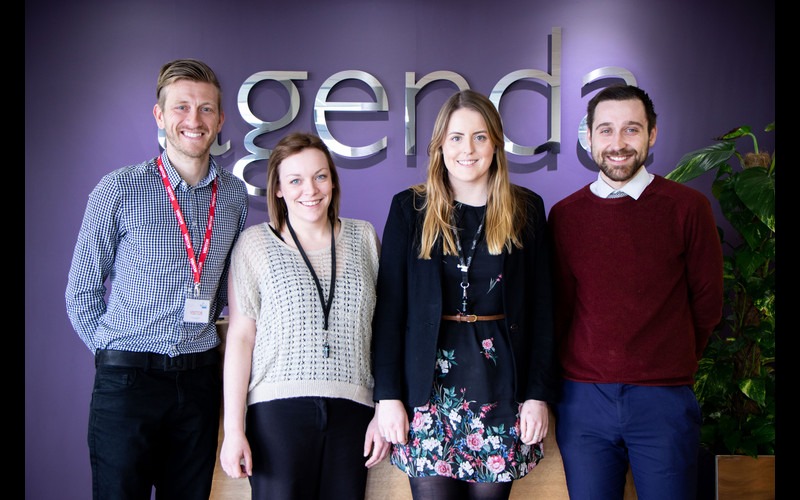
July sees the launch of the ‘Agenda Leadership Academy’, which Mat has designed to help identify our leaders of the future by building on their existing skills and giving them management specific training. The programme received a lot of interest internally and following the shortlisting interviews, we were blown away by the potential of our employees.
Mat is working in partnership with Encompass Development, a local hull-based training provider, to deliver a 12-month programme. We are lucky enough to be in a position to offer this training to 2 of our employees that particularly shone during the selection process. They’ll benefit from a structured process of observations, ‘off the job learning’, 1-2-1 mentoring, increased responsibilities, professional discussions, e-learning and classroom sessions.
Upon completion, not only will they be in a great position to progress into a leadership role, they will also hold a Chartered Management Institute Level 3 in the Principles of Management and Leadership.
Both Mat and Mic have delivered great staff development initiatives as part of their projects and they build on our commitment to investing in our employees, as our people are the key to our success.
The winner of the staff challenge will be announced later this year.
June 2018 saw the first round of our annual customer satisfaction surveys with recruitment clients being surveyed, asking for feedback on the service, the staff they dealt with and our methods of communication.

As a company Agenda is highly focused on customer service and prides itself on providing the highest standards of services and communication with its clients. Surveys were completed online by permanent and temporary recruitment clients that have used our recruitment services in the last 6 months.
We were delighted with the results, with our recruitment services receiving 98% customer satisfaction, with 96% of survey respondents saying that they would use our services again in the future.
If you would like any further information about this survey or any other aspect of our recruitment services, contact jobs@agenda-rm.co.uk or call 08456 44 55 45 for a prompt response.
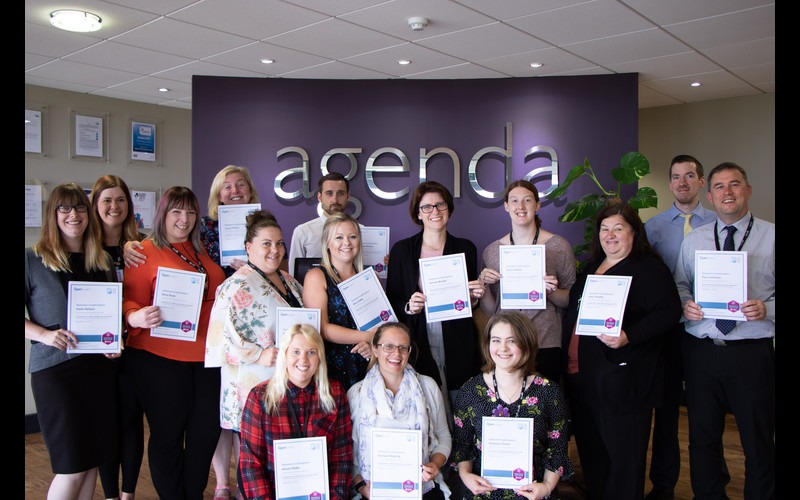
Agenda would like to say a huge well done to a recent participant in our Agenda staff challenge. Mic, from Agenda’s IT department has just successfully assisted 15 members of Agenda staff through an Open University ‘Introduction to Cyber security: stay safe online’ course, with all attendees gaining an Open University qualification.
The Staff Challenge was put together as part of our ongoing commitment to making Agenda a Great Place to Work, which is a key strategic objective for us. The challenge gave Agenda employees the opportunity to win £2,000 for coming up with a concept or idea that will help to better the business.
The concept behind Mic’s entry into the challenge was that he wanted to help employees to gain a better understanding of online security and how to protect their digital life, whether at home or at work, this meant looking at steps for how to reduce the threat of attack online and reduce the chance of you being susceptible to these kinds of attacks. All fifteen members of staff who participated in the course attended during their lunch hours, twice a week for two months.
The winner of the staff challenge will be announced later this year.
Most of us dread job interviews, no matter how much we want the job. Nerves can get the better of you and unexpected questions can throw you off, but there is still a good amount of preparation you can do to make sure it goes as smoothly as possible. Here are 12 things which you should never do or say in a job interview if you want it to go well for you.

It is very possible that the interviewer will ask you a question you are not prepared for, but there are much better responses than a simple ‘I don’t know’. By answering with a suggestion that you need to gather more information or ask another person for information shows to the interviewer how you deal with situations where you don’t know the answer. Be proactive about it, don’t try to sweep it under the rug.
It is better to leave discussion of salary to after a formal job offer has been made. Alternatively, this could also show a lack of research done into the role, as many jobs will have a salary band advertised. Too much emphasis on what the benefits are for you will not give the interviewer a favourable impression.
A crucial part of going for a job interview is to do your research. You should at least know enough about the company that anyone could find from a simple Google search and review of the company website.
A job interview is not the place to complain about previous employers, it is the chance to show off your skills and expertise for the job. Instead of focusing on the negative experiences you may have had in a previous role, focus on the achievements you made there and how this would benefit the company you are interviewing for.
It is the interviewers job to decide if you have the skills they are looking for and being reserved about your skill-set can come off as very negative. Even if you are a new graduate or looking for a change in career, focus on transferable skills and what you would be able to bring to the role.
You should always prepare a couple of questions to ask at interview as it shows you have an interest in the role and the company. Jot these down when you are doing your research before the interview and try to keep them open-ended to avoid yes or no questions.
First impressions count, and there should be no excuse for arriving late to your interview. Don’t let the interviewer make assumptions about you or your abilities by arriving late.
Don’t make assumptions about dress code in the workplace. Some have a more casual dress but for a job interview you should dress professionally. It is always better to be overdressed than underdressed at an interview.
Slouching in your chair and not making eye contact is unacceptable in an interview. Sitting up straight and looking at your interviewers will make you more engaged and focused.
There is no reason to get your phone out, it should be switched off and put away for the duration of the interview.
Aim for a neutral or positive demeanour during the interview. Your skills and experience are being evaluated, but your personality will also be scrutinised. Interviewers will be assessing whether you will fit in with the team and the company, and there are few who wish to hire those with a negative outlook.
If you need to fake your credentials or lie about your experience in an interview to get a job, then you should accept the fact that the job is not for you.
This list may not make your job interview experience any more enjoyable, but it will help you prepare and give yourself a better chance of making a good impression. Even if you are unsuccessful for the particular job you interviewed for, how you come across in interview can stick in people’s minds and you may find other opportunities opening up for you.
Cancer research is always ongoing in the hope to find a cure for cancer, but the reality is that one drug or a one-size-fits-all treatment is not enough to fight it. Immunotherapy is considered the next big thing in treating cancer, but cancer is smart has many ways of avoiding treatment. One new drug being developed provides a double whammy, that stops two ways of cancer cells avoiding destruction, and helps the body eat and destroy cancer cells.

The new drug boosts the action of white blood cells, called macrophages, that the immune system uses to destroy unwanted invaders. Dr Ashish Kulkarni who works at Brigham and Women’s Hospital in Boston, USA where the new treatment is being developed, described microphages as ‘the Pac-Man of immune cells’ as they are good at fighting bacterial and viral infections because they can recognise and engulf ‘foreign’ invaders. However, they are not as effective at fighting cancer as the tumours grow from cells already in the body and they have tricks to hide from immune attack. In normal circumstances, M1-type microphages engulf and destroy the invaders, while M2-type microphages are involved in tissue repair and wound healing.
Cancer cells can avoid destruction by microphages in two ways. Firstly, they can send out a ‘don’t eat me’ signal that tricks M1 microphages into leaving them alone. Secondly, they can convert M1 microphages into M2 microphages, thus eliminating the threat of being destroyed. This is also a major issue as M2 microphages can actually help tumours to grow, as they cannot distinguish the cancer tissue from healthy tissue. The new drug blocks the signal that the cancer cells use to trick M1 microphages and at the same time, cuts down on the conversations of M1 microphages to M2 microphages. It is the first time that these have been combined into one delivery system.
Dormant cancer cells are notoriously difficult to detect among normal cells in the body, so the key to this new research was fine-tuning the method of detecting and isolating them. The study tested the new drug on mice with aggressive forms of breast and skin cancer. The mice that were left untreated formed large tumours by day 10, mice treated with therapies that are already available showed a decrease in tumour growth, but the mice treated with this new therapy had a complete inhibition of tumour growth.
It is hoped within a few years this treatment will be ready for trials in humans and will be used to educate the immune system to make sure it can target cancerous cells. The researchers in the US are hoping that the approval process will be hastened by the fact that the drug they have designed already has a licence.

If you’ve ever wondered why you get angry whenever you’re hungry, good news! Science might have found the cause of being “hangry” – and it is not as simple as low blood sugar levels. It’s a complex interplay between your feeling of hunger, your awareness of your feelings, and what’s going on around you. As reported in the journal Emotion, the team believe that the causes of being hangry are related to both context and emotional self-awareness.
“You don’t just become hungry and start lashing out at the universe,” co-author professor Kristen Lindquist, from the University of North Carolina at Chapel Hill, said in a statement. “We’ve all felt hungry, recognized the unpleasantness as hunger, had a sandwich and felt better. We find that feeling hangry happens when you feel unpleasantness due to hunger but interpret those feelings as strong emotions about other people or the situation you’re in.”
The researchers conducted two experiments. The first was based on 400 volunteers from the United States that were shown images designed to induce positive, neutral, or negative responses. They were then asked to rate a Chinese pictograph on a seven-point scale from pleasant to unpleasant and state how hungry they feel.
The Chinese pictograph was chosen as an ambiguous image that shouldn’t evoke any strong feelings – and yet it did. Hungrier participants were more likely to rate the pictograph negatively, but only if they had previously been shown negative images.
“The idea here is that the negative images provided a context for people to interpret their hunger feelings as meaning the pictographs were unpleasant,” lead author Jennifer MacCormack explained. “So there seems to be something special about unpleasant situations that makes people draw on their hunger feelings more than, say, in pleasant or neutral situations.”
The second experiment was conducted on 200 university students that had to either eat or fast before the test, with some of them also asked to write about their emotions. Afterward, all the participants had to participate in a scenario that evoked negative emotions. In this case, the computer they were using was set to malfunction during the test and they were blamed for the crash. The hungry students reported feeling more negative emotions, but only those who didn’t write about their emotions previously.
“Our bodies play a powerful role in shaping our moment-to-moment experiences, perceptions, and behaviours – whether we are hungry versus full, tired versus rested or sick versus healthy,” said MacCormack. “This means that it’s important to take care of our bodies, to pay attention to those bodily signals and not discount them, because they matter not just for our long-term mental health, but also for the day-to-day quality of our psychological experiences, social relationships and work performance.”
This June Agenda were one of the first companies in the UK to achieve certification to BS10012 Personal Information Management System. Agenda also successfully gained certification to ISO22301 (ISO 22301) Business Continuity Standard.

BS10012 Personal Information Management provides a best practice framework for a personal management system that is aligned to the principles of the EU GDPR. It outlines the core requirements organisations need to consider when collecting, storing, processing or disposing of personal records related to individuals.
ISO/IEC 22301:2012 sets out the requirements for a business continuity management system (BCMS) and is considered the only credible framework for effective business continuity management in the world. Effective business continuity management means an organisation can resume operations and return to ‘business as usual’ as quickly as possible after a disruptive incident, for example a cyber-attack or power failure.
Agenda used its GDPR project as an opportunity to implement a Personal Information Management System (PIMS) using the British Standard BS10012 as the framework. PIMS is being used as part of Agenda’s overall governance strategy to maintain and improve data protection and compliance to GDPR
“Until there is a Privacy certification route offered by the ICO, BS10012 is the closet you can get to having a management system that is aligned to the principles of GDPR. This standard is important to Agenda as it demonstrates to our clients that we take privacy and data protection seriously and we handle data in a transparent, ethical and secure way.” (Chris Withers, Head of IT and Compliance)
The team at Agenda have also been busy gaining certification to the international recognised Business Continuity Management Standard ISO22301. “Certification to this standard demonstrates to our customers that they can rely on Agenda’s services as part of their supply chain.” (Chris Withers, Head of IT and Compliance)
To gain these standards Agenda are independently audited by a United Kingdom Accreditation Service (UKAS) accredited certification body every 6 months.
Immunotherapy has been in the science and health news a lot recently, but it is not a new treatment for cancer. Immunotherapy drugs work by stimulating the immune system to recognise and fight cancer and is already being used to tackle certain cancers. However, the response rate is still relatively low, and is a treatment that is in constant development and trials to improve its use.
New trials in using immunotherapy for more complicated cancer diagnoses are proving to be successful. One trial has shown that immunotherapy treatment could halt the spread of otherwise untreatable prostate cancer, as after one year over a third of the men participating were still alive, and one-in-ten had not had any further cancer growth one year on. Previous trials using immunotherapy for prostate cancer patients were unsuccessful, but recent research has examined the genetics of tumours and found how particular groups of patients may benefit. It is the first time immunotherapy has been shown to benefit some men with prostate cancer, the researchers said.
All the men on this trial were given the drug pembrolizumab, which is an immune checkpoint inhibitor. Checkpoints are used by cells to protect against immune attack, but cancer cells can use this to evade the immune system, causing cancer cells to spread. Checkpoint inhibitors allow the immune system to go around this system and hone in on cancer cells and attack them. The drawback to this is the immune system could get overactivated and attack normal, healthy cells but this only occurs in a minority of patients. A report presented at the 2018 meeting of the American Society of Clinical Oncology also identified that patients with non-small cell lung cancer who were given pembrolizumab alongside chemotherapy had a reduced risk of death by 36%.
Another case which has been circulating the media is of Judy Perkins, a woman in Florida who has been successfully treated of her advanced metastatic breast cancer after doctors tweaked her immune system to enable it to destroy the tumours that had spread through her body. Judy had already recovered from a malignant tumour only for her cancer to return more aggressively 10 years later, which is fairly common with breast cancer. Several chemotherapy sessions had failed to kill her cancer, and she was given three years to live.
Immunotherapy was previously thought to be ‘off-limits’ for her type of cancer, but a form of personalised treatment proved otherwise. This tailored treatment consisted of extracting T-cells from within the tumours. These cells try to identify and destroy cancerous cells but are ineffective on their own as the cancerous cells can evade their checkpoints. Researchers sequenced DNA and RNA from one of her tumours and from some of her normal tissue to see which mutated proteins were made by cancerous cells but not by healthy cells. They then programmed the T-cells to target the mutations and infused large cultures of them back in Judy’s immune system.
For the first time, this process was administered alongside pembrolizumab. Judy has now remained cancer-free for three years, and unprecedented outcome for such advanced breast cancer. This new approach to immunotherapy is dependent on mutations and not on cancer type, so it is more of a blueprint that can hopefully be used to treat other types of cancer. It is still in the experimental stages, but cancer specialists are hopeful this new approach to immunotherapy could succeed where others have failed.
Scientists from India and Swansea University have recently discovered that nanoparticles derived from tea leaves can inhibit and destroy lung cancer cells.

In keeping with some of the most important scientific breakthroughs they came upon this discovery by chance!
The discovery is all down to weird but wonderful little things known as quantum dots, a type of nanoparticle that is just 4,000th the thickness of a human hair. They are so unimaginably small that they were able to penetrate the nanopores of cancer cells and blast them with a cytotoxic effect, thereby killing up to 80 of percent them.
The use of nanoparticles is already being explored in numerous different fields. For example, companies are also using quantum-dot technology to provide enhanced colour quality for televisions and display screens and more efficient solar panels. They are also useful for tumour imaging because their changeable structure gives them unique fluorescent properties if they’re hit with light. However, the process of making them chemically is complicated, expensive, and can have toxic side effects.
So, the team set out to create a simpler method of producing non-toxic nanoparticles, as detailed in the journal ACS Applied Nano Materials. They did this using a Camellia sinensis tea leaf extract with two other chemicals.
When it came to looking at their use in cancer cell bioimaging, the researchers found something amazing: the quantum dots appeared to be killing the cancer cells.
“Our research confirmed previous evidence that tea leaf extract can be a non-toxic alternative to making quantum dots using chemicals” Dr Sudhagar Pitchaimuthu, lead researcher on the project, explained in a statement.
“The real surprise, however, was that the dots actively inhibited the growth of the lung cancer cells. We hadn’t been expecting this.”
It should be emphasized that this doesn’t mean drinking tea will prevent or “cure” lung cancer. It’s also extremely early days for the research. Dr Pitchaimuthu told BBC News that they imagine there could be human trials in two years and, all being well, perhaps a viable treatment in a decade.
Nevertheless, this tea-infused research shows that quantum dots could hold some real promise in the field of cancer research and beyond.
“The next step is to scale up our operation, hopefully with the help of other collaborators,” added Dr Pitchaimuthu. “We want to investigate the role of tea leaf extract in cancer cell imaging, and the interface between quantum dots and the cancer cell.”
“We would like to set up a ‘quantum dot factory’ which will allow us to explore more fully the ways in which they can be used.”
Organ donation and transplantation is a big discussion at the moment. Wales have trialled an opt-out system to help boost numbers on the organ donation list, and similar plans are being discussed for England and Scotland. Last month, Addenbrookes hospital in Cambridge were the first in the UK to use the ‘perfusion machine’ for liver transplants, as this keeps the donor organ pumped with blood, nutrients and medicine. They have started using this technology as donor organs that are stored in ice can become damaged and unstable as a result.

How to store and keep organs for transplants is still a huge problem in the process, as at the moment there is a very small time-frame in which they can successfully be used. Kidneys are usually stored for up to 30 hours, as after this time the tissue begins to deteriorate and affects the ability to function normally. Livers, lungs, and hearts have an even shorter shelf-life.
A new study has begun to explore how the process of hibernation could help with research into prolonging the shelf-life of donated organs. In this new study, researchers from the National Eye Institute in the United States focused on ground squirrels, a small hibernating rodent native to North America. They discovered that the animals dramatically lowered their heart rate and body temperature to enable them to survive the winter months. Scientists hope that by understanding how the cells of hibernating animals adapt to cold temperatures, similar processes could be applied to human tissue, prolonging the viability of organs prior to transplantation.
The scientists reprogrammed the cells of ground squirrels into stem cells under a microscope, where they observed how the cells adapt to the cold. They discovered that one reason for the hibernating creatures’ resilience to low temperatures was related to the mitochondria, also known as the ‘powerhouse’ of the cell. The experiment showed that when humans are exposed to cold temperatures, the mitochondria in our cells secrete a by-product of metabolism called Reactive Oxygen Species, or ROS which uses up more of our energy in a short space of time. In comparison, the mitochondria of hibernating squirrels maintain low ROS levels, prolonging the use of energy.
Also by researching and understanding hibernation and cold adaptation, scientists hope this could lead to improvements in induced hypothermia. This process deliberately reduces a person’s body temperature to protect the brain after a cardiac arrest or brain injury, however it is still controversial as it can cause cold-induced cellular damage. With further research, it is hopeful that induced hypothermia will be improved to be used as a viable treatment, and also to help prolong the shelf life of donor organs.
It is very early days for this new research, and it may well be a few years before we see any of the research come to fruition. In the meantime, be sure to register on the organ donor list!
What is Hay Fever?

Hay fever is an inflammation in the nose which occurs when the immune system overreacts to allergens in the air. It does this as it mistakes pollen for something harmful like bacteria, which triggers the cold-like symptoms that comes with hay fever. It is called ‘hay fever’ as the most common type is triggered by pollen of seasonal grass and trees which are most prevalent in the haying season. However, it also affects people in different ways, depending on what allergens each person is allergic to. Some will only experience it for a few months whereas others can suffer all year round.
Symptoms are usually mild but for some it can be more severe and cause other issues such as sleep problems, and it is still not clear why some people are more susceptible to hay fever than others. One theory is that is could be hereditary, and if your parents have hay fever then you are also likely to suffer from it. Another suggestion is that it is due to your immune system being ‘out of practice’. If you weren’t exposed to microorganisms as a child, then later in life your body could mistake harmless things like pollen for bacteria and cause the reaction to it.
Myths
There are still many myths surrounding Hay Fever:
A higher percentage of children suffer from hay fever than adults, but while for some people the symptoms can be less severe or even disappear entirely as they age, this is not the case for everyone. According to the NHS, only 50% of sufferers believe they have improved after several years.
While it is more common for symptoms to show during these seasons, it can depend on the type pollen that affects you most. Grass pollen is released during spring and summer, but a lot of sufferers are allergic to tree, grass, and weed pollens which can cause hay fever symptoms all year round.
Hay fever symptoms are mostly caused from pollen that is airborne, from grass, trees, and weeds. However, most flower pollen is too heavy and sticky to be carried through the air, so it is less likely that it is the main cause of your hay fever symptoms.
In the past antihistamines had a reputation for causing drowsiness but medicine has advanced a lot further since they were first introduced, so now it is unlikely to cause drowsiness in most people.
Around 40% of children suffer from hay fever, but this doesn’t mean that you can’t develop the condition as an adult. In fact, recent studies have shown that there has been a surge in late-onset hay fever. This could be due to more pollution, climate change, more sterile houses, and new species of plants being introduced to the UK.
It is an old wives’ tale that a teaspoon of local honey will help you build up an immunity to pollen and alleviate hay fever symptoms, but there is no scientific evidence to support this. This also goes back to the myth that hay fever sufferers are allergic to flowers – flower-based pollen is not the cause of hay fever, and bees do not pollinate grass and trees.
Depending on the pollen count and your exposure to it, people’s symptoms can fluctuate between mild and severe. When symptoms are mild, it can seem as if the medication is working but if they get worse again, people believe they have become intolerant to antihistamines.
This is not the case. Symptoms will get worse or better depending on the pollen count and the environmental factors which could increase your exposure to it. Antihistamines can be taken for long periods of time without becoming less effective. In some cases, it can be that the over the counter medicines aren’t strong enough to counteract with your symptoms, in which case going to see your GP is the best option.
This hold some truth, as rain will clear the air of pollen and people are less likely to suffer from symptoms on a rainy day. However, stormy weather will have the opposite effect and breaks up and distributes pollen particles, making them easier to inhale. So, while rain showers my ease your symptoms, be cautious when this rain comes with windy and stormy weather.
Agenda attended the annual ScandLAS meeting that held the title “Beyond legislation – Best practice in Animal Research” where the one of the main themes was how to achieve the highest possible scientific and welfare standards in animal research. The meeting was held in Kristiandsand in Southern Norway. The venue was on the coast, surrounded by Norwegian mountains and a number of lakes.

With 250 attendees mostly from Scandinavia (several from the UK), it was a good opportunity to discuss animal welfare beyond our own borders. With the focus on welfare we presented our Welfare First program to the delegates visiting our stand and discuss the important of the programme. Animal technicians from Scandinavia were very impressed with the concept of Welfare First. The programme included a variety of speakers from Scandinavia and the UK.
We arrived Wednesday afternoon to set up the stand and ready to meet the delegates. Thursday was the big opening day with a get together party in the evening. The venue for the trade area was right next to the registration so we got to interact with a lot of people. The get together party was held in a beautiful restaurant with entertainment from an original Norwegian folk singing group. Everyone was presented with the lyrics (in Norwegian) which made the song from the delegates a fun thing to do as many did not speak Norwegian. Friday was Exhibitions evening with a quiz from all trades and the prize was a scholarship from Scanbur for next ScandLAS. This prize was won by Mette Joergensen an animal technician from Saniona research in Denmark, congratulations from Agenda to Mette.
Saturday morning was the last day with the big Gala dinner in the evening. A wonderful dinner to end a great meeting People were busy discussing the different talks they have been attending throughout the days, talking to old and new friends and presenting ideas for the next ScandLAS meeting.
Agenda had a draw for a Google Mini Dot that was won by Susanne Groenlund from Lund University in Sweden. A big congratulation to Susanne.
Thank you to the ScandLAS committee for hosting such a great meeting.