
After 17 years at Agenda and over 40 years working in the Life Science and Screening sectors Norman has decided to hang up his boots and will be retiring at the end of the year.

He has made a significant impact at Agenda working his way up from office manager to managing director whilst always having a positive can-do attitude, a sense of humour and most importantly he always had time for people.
We are delighted that Norman has been able to retire at a relatively young age, but it is also tinged with sadness as he will be sorely missed by his colleagues and our clients. We wish him luck for the future and thank him for his contribution to the development and growth of Agenda over the years.
Agenda’s long-term growth strategy continues with exciting new plans and appointments to be announced in 2019 – watch this space.
On December 19th Agenda welcomed auditors to our head Office to conduct a review of our compliance to ISO standards within the business. During which we are pleased to announce that we passed our surveillance audit for ISO27001 Information Security, ISO9001 Quality management and 14001 Environmental management.

“Passing the audits is an important part of our internal assurance, but more importantly lets our clients know that we are following international recognised standards and best practice” Chris Withers Head of IT and Compliance at Agenda
Our commitment to these ISOs shows that Agenda have invested in the externally audited certifications to provide reassurance, not only to ourselves as a company, who by having processes to follow means we are striving for the best. But also, to clients and potential clients that we have robust and compliant processes in place. These audits mean we are continually improving and seeking ways to develop the quality of the services that we provide.
Well done to everyone involved in todays audit and keep up the good work.

Now is your chance to enter our Christmas competition – Agenda’s Christmas Conga! We’ve got daily prizes to be won, from bubbly to an Apple Watch. Keep your eyes on our social media to find out each day what prize is up for grabs.
Just get your name on our Conga Leaderboard to be within a chance of winning!
Good luck and Merry Christmas from all at Agenda.
Agenda are delighted to announce the appointment of Bridgette Archer as the new Business Development Executive for Agenda Life Sciences for the South of England and Wales.

Bridgette was originally a contract animal technician for Agenda before moving onto working as a Senior Animal Technician for University College London for the past three years.
At Agenda, our aim is to provide well trained enthusiastic technicians to support your inhouse team and we are delighted to have Bridgette to working with you and our team in the office to ensure we meet your needs going forward.
For more information on our recruitment services contact our team on 08456 44 55 45 or via email jobs@agendalifesciences.co.uk

If you are attending the 2018 LASA (Laboratory Animal Science Association) Annual Conference, why not drop by the Agenda Life Science stand (stand 43). Agenda Life Sciences specialise in life science recruitment, contract staffing, training and consultancy and the provision of facility management services. If you are attending the LASA Annual Conference, why not drop by the Agenda stand, we will have specialists on the stand to discuss how we can help you and why not have a sneaky peak at this year’s Agenda Christmas Game.
Don’t forget to come along and pay us a visit – we’ll be at stand number 43. We’ll be happy to discuss any needs that your business may have.
For news and updates whilst we’re at the conference, why not follow us on social media?
This 1½ -day course is aimed at those involved in drug discovery and development who will need the tools for effective management of nonclinical outsourcing and study monitoring.

The course has been designed for those with no or limited study monitoring experience, or for those new to pre-clinical outsourcing. The training will explain the whole process of study monitoring largely using real life examples. At the end of this course delegates should gain a full understanding of the challenges, practicalities and role of being a study monitor and managing nonclinical outsourcing. The course will be led by two experienced presenters each having over 25 years’ experience in industry and contract research organisations, both in running contracted work and acting as Study Monitors across all aspects of nonclinical development.
Course objectives:
To book your place click here.

This year, Agenda’s chosen charity is Parkinson’s UK and we have been fundraising for them throughout 2018. As many as 10 million people around the world are thought to have Parkinson’s disease, and this number is expected to rise with an aging population, in which the illness becomes more prominent. Current medications help to manage symptoms, but we don’t yet have a treatment that can cure, slow, stop or reverse its progression.
Parkinson’s was in the news recently as a new technological advancement is being tested to hopefully speed up the diagnosis of the disease. If this system is successful, it is also hopeful that it could be a useful first step in identifying patients suitable to participate in research to understand the disease better, and work on a cure.
Chinese tech company Tencent and London medical firm Medopad have teamed up to use artificial intelligence in the diagnosis of Parkinson’s disease. They have developed a camera that captures the way patients move their hands to determine the severity of their symptoms, without patients wearing any sensors or devices. The camera was programmed with existing videos of patients that had been assessed by doctors at the Parkinson’s Centre of Excellence at King’s College Hospital in London.
The aim of this new process is to speed up the motor function assessment process which usually takes more than half an hour. Using this new technology, patients could be assessed in three minutes and may not even have to attend a hospital.Medopad already develops mobile apps to monitor various health conditions including diabetes, cancer, and heart disease.
The new system works by filming fine hand movements such as opening and closing fists, which are then digitally analysed. This will allow doctors to remotely examine strength and movement tests to make a diagnosis. In the new project, the aim is also to train the AI software to automatically score the tests, making it a quicker process for doctors to determine the onset of Parkinson’s disease.
This would be especially important for early diagnosis, which in turn could help other scientists working on research for Parkinson’s find a cure for the disease.
At the moment, many Parkinson’s patients put off seeing a doctor until their motor symptoms require treatment or medication. Additionally, there are often unwanted delays in times between setting an appointment and being seen – an issue which could be helped with this new technology project.
As many patients wait too long to seek medical attention it leaves researchers with a small group suitable for medical trials, as it is important for patients to participate in trials before they start taking symptomatic medications. Another problem is that many patients are placed on symptomatic medication even if treatment is not yet required, further narrowing the group of suitable Parkinson’s patients who are able to participate in clinical trials.
Interference from medications makes it difficult for researchers to tell if the potential treatment being tested is slowing disease progression, or if they are just seeing the effects from other therapies already in use. Hopefully, the new AI system will be able to diagnose symptoms earlier and easier, giving researchers a bigger pool of patients who will be able to help find better treatment, or even a cure for Parkinson’s disease.
The Zika Virus made headlines in 2015 and 2016 when there was an epidemic in South and Central America. Zika mainly attacks cells in the brain known as neural progenitor cells and is not particularly harmful to adults as they don’t have many of these cells. However, it is dangerous to unborn children as they have many neural progenitor cells and the virus causes a birth defect called microencephaly, which results in an unusually small head and can lead to complications including seizures.
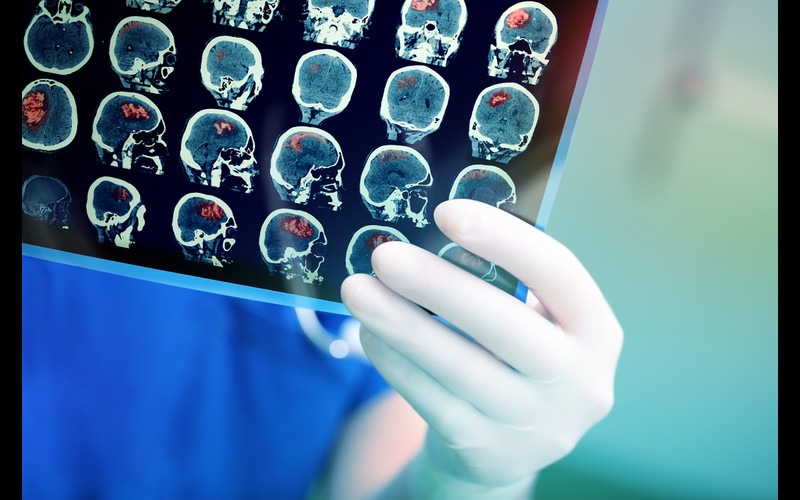
Now scientists are hoping to use this devastating virus as a potential cancer therapy.
Glioblastoma is the most common form of malignant brain tumour. It is an aggressive type of cancer that is particularly difficult to treat, as it often resurges and is usually lethal within two years. The tumour’s ability to return once removed is thought to be connected to glioblastoma stem cells (GSCs) which hide out in the brain and avoid cancer treatments including radiotherapy and chemotherapy. GSCs share some properties with neural progenitor cells, and as Zika specifically infects the neural progenitor cells, researchers wanted to see if the virus could also infect the GSCs.
Previous research conducted in Brazil showed that Zika could kill GSCs in a dish, as they infected human glioblastoma cells with the virus and recorded microscopic images in order observe any changes. After 48 hours, the glioblastoma cells were swollen and had a loss of cell integrity which indicated cell death.
Now, new research has extended on this and successfully managed to kill human glioblastoma cells that were transplanted into mice.
They first wanted to ensure that they could find a safe way of introducing the Zika virus to patients, and developed an attenuated Zika vaccine called ZIKV-LAV. This virus is still ‘live’ but has been genetically engineered to neutralise the infectious Zika while preserving particles which induce the death of tumour cells. In tests, ZIKV-LAV protected both mice and non-human primates against Zika infection, and when injected into mice there appeared to be no physical or behavioural side effects.
To test the theory, half of the mice were injected with human-derived GSCs and the other half received the same GSCs but with the addition of ZIKV-LAV. The mice that received only GSCs developed tumours quickly, but the mice that also received the vaccine showed delayed tumour growth and survived significantly longer.
The researchers now plan on making their cancer-killing vaccine more potent and hope to work with clinicians to develop ways to test its safety in humans. The hope for the future is that the virus can be used as a cancer treatment to hunt down GSCs and eliminate them, thus preventing the recurrence of the brain tumour.
About 10 years ago, researchers at the Royal Veterinary College found a family of King Charles Spaniels that had a canine version of Duchenne Muscular Dystrophy (DMD). With this, they began research in the hopes of one day finding a cure. Now in a new study, scientists have halted the progression of the disease in some of the dog descendants from the King Charles Spaniel family using the gene editing tool CRISPR.

DMD is the most fatal genetic disease in children, and mostly affects boys and young men, around 2,500 people in the UK have the condition. Those born with the disease have a genetic mutation that stops them producing dystrophin, a protein that is vital for muscle strength and function. It has a high fatality rate in children as their heart loses the strength to pump blood to the body, or their diaphragm becomes too weak to breathe.
This new study was a collaboration between the Royal Veterinary College in London, and the University of Texas Southwestern Medical Centre in the US. They wanted to test gene editing in dogs as DMD also occurs in many dog breeds, which means a positive result could lead to better treatment for both dogs and humans. The researchers wanted to show that CRISPR was safe and effective in dogs and then move on to human trials.
The team did not know what to expect from the study, as using CRISPR body-wide in a large mammal had never been done before. They prepared for the worst – inflammatory immune response, liver toxicity, anaphylaxis – but all they saw was puppies who could play again.
The study consisted of injecting one-month-old dogs with two harmless viruses that edited the genome in cells of the muscles and heart. Within weeks of the gene edit in the dogs, the missing dystrophin was restored in muscle tissue around the body, including up to 92% the heart and 58% in the diaphragm. Scientists previously have estimated that a 15% or greater improvement is needed to significantly help patients, so the statistics from the study are very encouraging.
This new strategy edits the mutation that causes the disease, but the technique used in the study was only for a genetic fault that affects around 13% of DMD sufferers. However, experts are hopeful it could be applied to the many other mutations those with the condition have.
This was a small study, but the researchers are optimistic that it will be regarded as a ground-breaking study that led the way to effective treatment. The next step will be to conduct larger and longer studies to see if gene editing does help to slow the progression of DMD and improve muscle strength. It won’t be a cure but will certainly be a beneficial treatment for those suffering with DMD.
A new type of cell has been discovered in the human airway, and it may have a central role in cystic fibrosis. There are currently 70,000 people across the world living with cystic fibrosis for which there is currently no cure, and the disease is a major cause of poor health and a shortened life span.

What is cystic fibrosis?
A genetic disorder that mostly affects the lungs, but can also affect other organs including the pancreas, liver and kidneys. The gene affected by cystic fibrosis controls the movement of salt and water in and out of cells in the body, so sufferers experience a build-up of thick mucus in the lungs and other organs. You can only be born with cystic fibrosis as it is caused by a faulty gene from the parents, around 1 in 25 of us is a carrier of this gene. At present there is no known cure for cystic fibrosis, and the lung infections caused by the illness are only treated with antibiotics.
The gene responsible is known as Cystic Fibrosis Transmembrane Conductance Regulator, or CFTR, and it is the mutation of this gene that causes cystic fibrosis. CFTR handles the protein that transports chloride ions across cell membrane and plays a key role in managing hydration and pH balance, two main problems for cystic fibrosis patients. Scientists already know that mucus proteins do not form properly in cystic fibrosis patients which causes salt-water imbalances and dehydration. The mutated CFTRs result in a build-up of thick mucus in the lungs, pancreas, and other organs that cause breathing problems, infections, and other health issues that plague sufferers of cystic fibrosis.
The researchers, from the Broad Institute of Harvard and MIT and Massachusetts General Hospital, initially carried out a study in healthy and CFTR mutated mice. They analysed thousands of lung cells in the mice and mapped the location of these cells to create an ‘atlas’. When they sorted these cells, they found that there were seven types, not the six that had previously been counted. The cellular-tagging techniques and computer algorithms used have only been technologically feasible in the last few years, which may explain why the new cell has been missed in previous research.
What is most exciting about this new cell is that it shows signs of being the primary source of activity for the CFTR gene. The gene can be expressed by many lung cells, but it is mainly expressed by pulmonary ionocytes, and the newly discovered cell was found to contain an abundance of these. Once the researchers had discovered this new cell in mice, they then confirmed the presence of pulmonary ionoytes in healthy human lungs. The researchers hope that their discovery could lead to the development of more targeted therapy for cystic fibrosis as knowing that pulmonary ionocytes is the main source of CFTR gene expression could help scientists create therapies that can be delivered by these specific cells.
At the moment, scientists have only identified that human lungs have pulmonary ionocytes, and they have not yet looked for the cells in cystic fibrosis patients, or in the other organs that the disease can affect. The findings also need to be explored by other researchers specialising in cystic fibrosis, so the new discovery will not rapidly change current therapy. There are some treatments already in use with cystic fibrosis patients, which help improve the function of the mutated gene associated with CFTR production so that mucus will be thinner and less viscous. Hopefully this new development will contribute immensely to the ongoing gene therapy and stem cell research that might one day cure the disease.
Summer is upon us and last-minute holiday diets are everywhere, but does eating ‘negative calorie’ foods such as celery, actually help to increase weight loss?

A calorie is a unit of energy, usually expressed as kilocalories (kcal) for the energy content in food. It is commonly believed that in the act of eating celery you are actually burning off more calories than you are consuming.
In reality, even the lowest calorie foods, such as celery, contain more calories than it takes to break down and absorb them in the body.
Our energy needs are made up of three components:
Of these, the thermic effect uses the fewest calories – about 10% of the energy we take in. In other words, about a tenth of the calories we eat are used to process our food – this includes chewing our food, moving it through the digestive system, absorbing nutrients and storing excess energy.
Foods such as celery, grapefruit, broccoli, tomatoes and cucumber have all been touted as negative calorie foods, but there is no scientific evidence to support this idea. Although they are very low-calorie foods, with seven to 30 kcal per 100g, it still takes less energy than this to process them. This is because they contain large amounts of water and fibre, which have a very low energy cost.
Don’t be too disappointed though…
These foods are very useful for people who are trying to lose weight, as they contain a low number of calories. By replacing the food in your diet with some of these – for example, replacing a side portion of chips with a side salad – it is possible to lower your calorie intake considerably. As an extra boost, they are full of nutrients, such as vitamins and minerals, and also contain a lot of fibre, which also has many benefits for your health.
In order to lose weight, people need to use up more energy than the energy (calories) they eat and drink, but this is difficult. Research has shown that people tend to underestimate the calorie content of the food they consume, and they underestimate it by more if they are obese rather than normal weight.
There has been a lot of research recently about how the gut microbiome can affect our bodies in ways we wouldn’t even think of. Now, researchers are looking into how the make-up of the mother’s gut can affect the development of autism-spectrum disorders during pregnancy.

The gut microbiome of pregnant mothers is very important to how the offspring’s immune system is going to respond to an infection, injury, or stress. In the new study, researchers studied the inflammatory molecule interleukin-17a, or IL-17a, and found it was a key contributor to the development of autism-like symptoms in lab mice. John Lukens, the lead author on the study, likened the molecule as the ‘middleman between the gut and the brain’.
To test their theory researchers recruited female mice from two separate labs. Mice from one lab contained microflora in their gut which makes them prone to an IL-17a induced response, whereas the mice from the second lab did not. The team found that when IL-17a was artificially blocked, the pups from both sets of mice were born with neurotypical behaviour. However, when there was no human intervention, the pups born from the first group of mice containing microflora went on to develop an autism-like neurodevelopmental condition. This means that directly blocking IL-17a in pregnant mice prevented the development of neurodevelopmental disorders. However, translating this approach for human use will not be easy.
Directly blocking IL-7a in humans could do more harm than good. Since IL-17a comes from the immune system it may be risky to try and change the immune system during pregnancy and can put both the mother and foetus at risk of infections. While the effects of the gut microbiome could be prevented by directly blocking IL-17a, the researchers found that a healthy microbiome could also block IL-17a. It is encouraging that the study suggests autism-spectrum disorders could be prevented in offspring by modifying the mother’s diet, by taking custom probiotics, or through fecal transplantation as this would prevent an invasive treatment during pregnancy by directly blocking the molecule.
IL-17a has previously been implicated in other conditions, such as rheumatoid arthritis, multiple sclerosis and psoriasis and there are already drugs available that target IL-17a for these. However, as we mentioned, artificially blocking IL-17a during pregnancy can be a problem. Instead, researchers are now exploring the role of other immune molecules in the development of autism as IL-17a may only be one piece of the puzzle.
These are only preliminary studies and are a long way off from being trialled in human pregnancies, but it is an interesting avenue to explore in autism research and provides good evidence that the health of the mother’s gut plays some role in the development of neurodevelopmental conditions.